
As a small business, keyword research lays down the foundation of your content strategy and SEO.
Picking the right keywords could mean more traffic for your business. But if you choose the wrong one, chances are your content won’t get discovered. This translates to wasted efforts and resources.
To improve your chances of success, we’ve created this guide on how to do keyword research for small businesses in just 6 steps. At the end of this post, you’ll have a list of the exact terms people are using when searching for your products or services. Let’s get into it.
Keyword research refers to the process of finding valuable queries and words your target audience enters into search engines when looking for your business’s products, services, and information.
Conducting keyword research can help you uncover marketing insights and actual information people are searching for. By creating content around these terms, you stand a chance of getting in front of your target audience. This visibility could mean more market share, traffic, and revenue opportunities for your business.
Now we have that down, let’s get into how to conduct keyword research for small businesses.
Off the top of your head, what topics relate to your business? This step is important because as a small business or even a new website owner, you’re likely not ranking for significant keywords yet. By answering this question, you’ll have a creative list of ideas that can grow into the exact words people are searching for.
To generate a list of keyword ideas for small businesses:
Do you offer interior decoration services or products? Your list of keywords may include ‘room design’, ‘dining table set for 4’, ‘interior decoration ideas’, ‘furnishings’, ‘room color schemes’, etc. You can brainstorm with your colleagues or use both generic and niche terms associated with your type of product or service.
While interior decoration is a keyword around your business, your customers might be searching specifically for small bedroom decorating ideas. They could also be searching based on seasonality or celebrations with words like ‘Outdoor Christmas tree lights’, ‘Valentine’s Day flower arrangements’, and so forth.
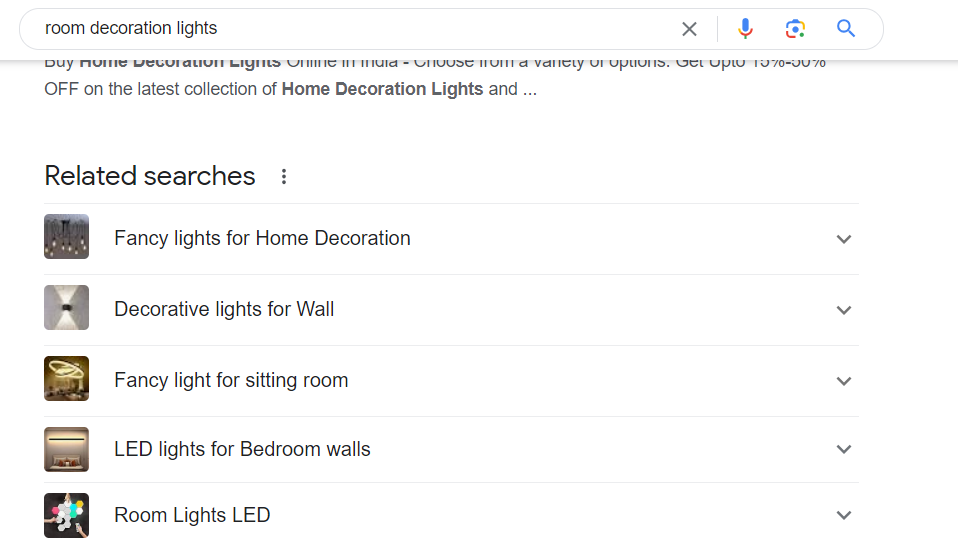
You can expand your list by browsing for a word or phrase and checking the ‘related searches’ section like in the image below.
Come up with 2 – 3 competitors and paste their websites into keyword research tools. This step allows you to see a list of keywords they’re ranking for. You can also go to your competitor’s website and manually review topics or words they use for services or products you offer.
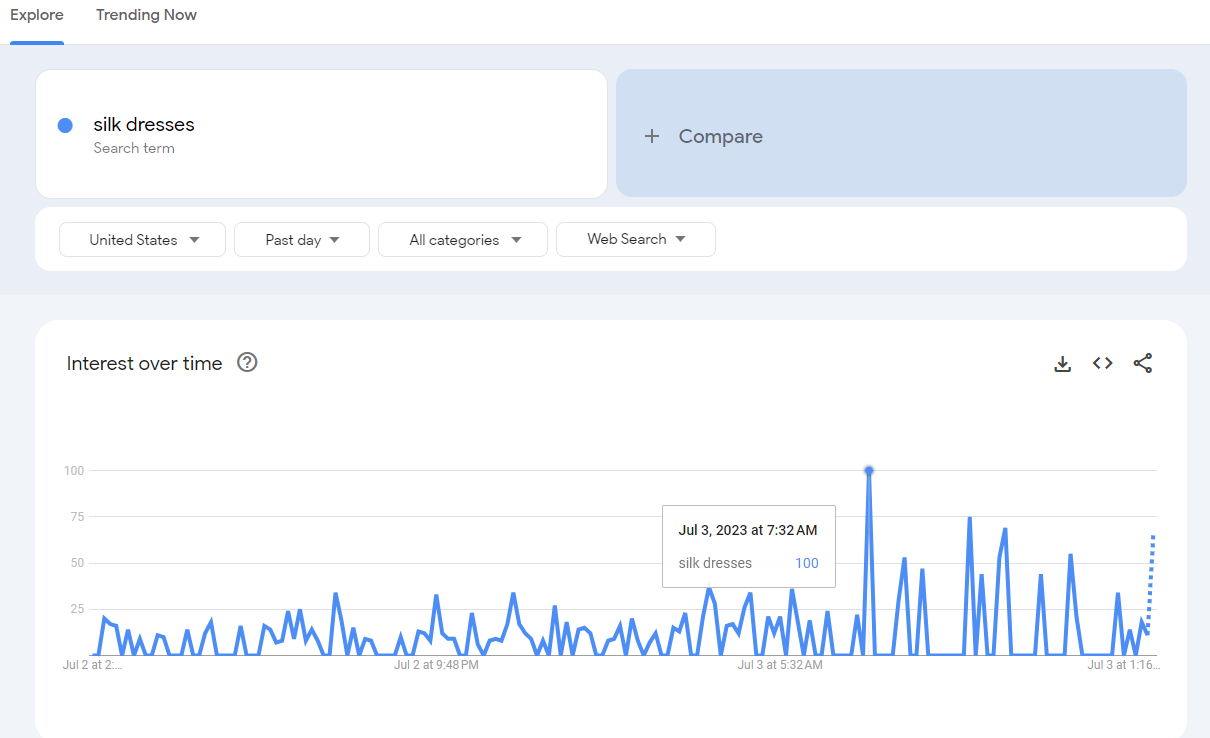
Google Trends
To get more insights such as keyword volume and website ranking for it, you need a tool. If you have a limited budget, you can start with free keyword research tools like Answer The Public, Google Keyword Planner, Google Trends, and Ahref’s free tools.
However, to get a broad and accurate view of each keyword, you can invest in paid keyword tools like SEMRush, Ahrefs, SE Ranking, and Moz. Once you choose a tool, go ahead and upload or paste the list of the seed keywords you created into the platform.
Depending on the tool you’re using, you would see a list of the seed keywords you uploaded as well as related terms, questions, and other phrases associated with them. Export this list into a spreadsheet.
Next, pick out low-hanging fruits, that is, keywords that are relatively easy to rank for based on your website’s authority.
To identify low-hanging fruit keywords, review the following:
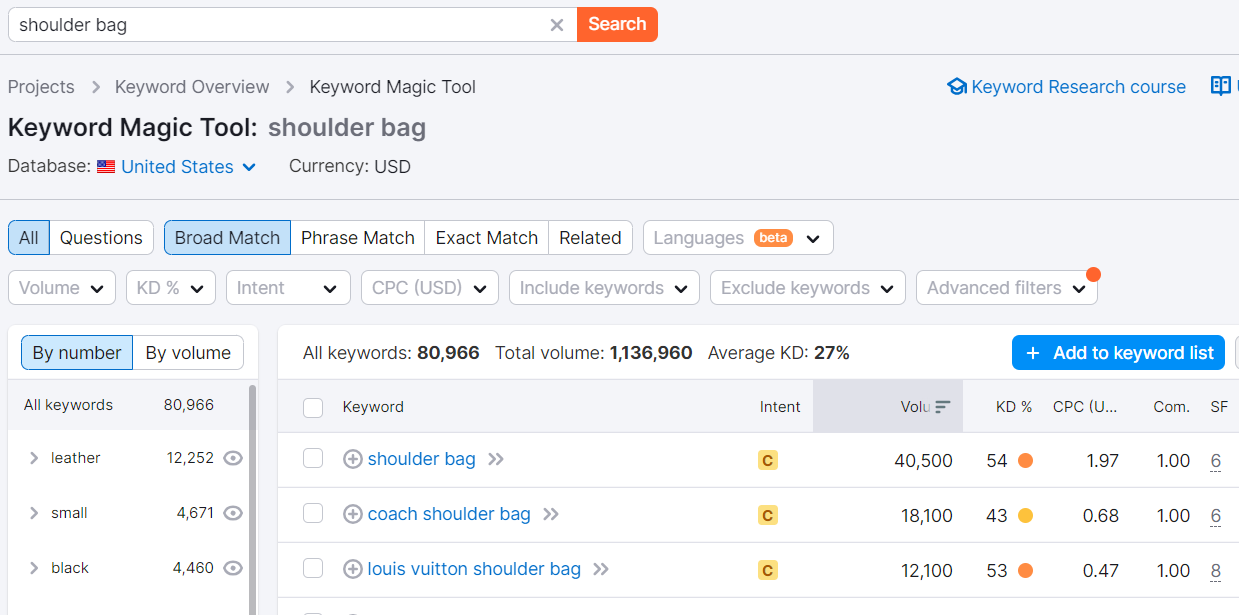
Long-tail keywords, on the other hand, are generally longer phrases with a more specific focus. For example. ‘Black shoulder bags for women’, and ‘Women’s lunch bag with shoulder bag’.
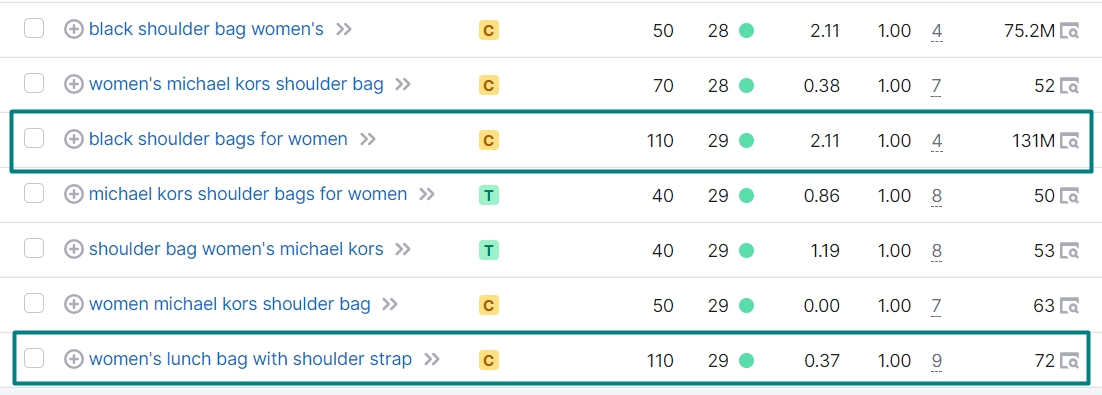
Notice the difference between the long-tail keywords in the image above and the previous ‘Shoulder bag’ keyword?
While the long-tail phrases have a lower search volume, they have a winning factor—lower keyword difficulty and a more targeted audience. With this data, you have a better chance of ranking for ‘black shoulder bags for women’ than a generic term. You can combine long-tail keywords with a few relevant short-tail ones if necessary.
Search intent is the main goal a user has when searching for a query. Let’s say a user is searching for ‘Coffee maker with grinder’ and you create content about the importance of coffee makers using this keyword. Chances are you wouldn’t rank for this. And even if you do, users would likely skip your content because they’re searching for brands that sell this product rather than a lesson on its importance. That’s why paying attention to user intent is highly important to your keyword success.
There are four types of user intent:
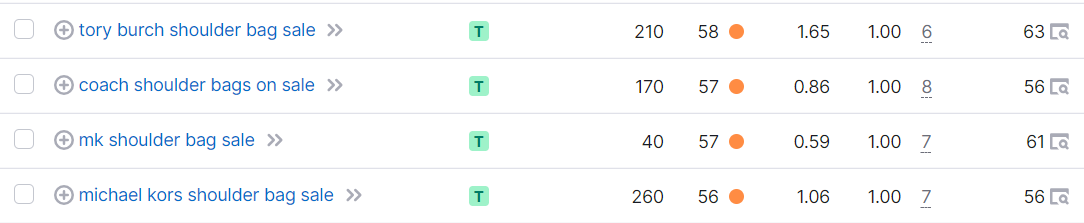
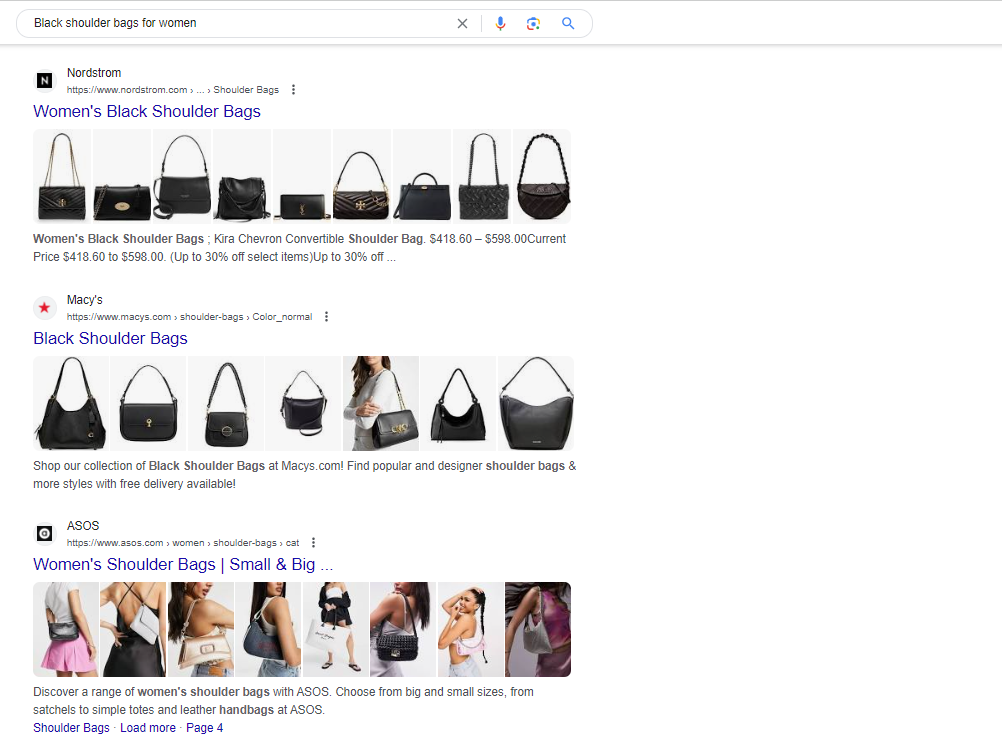
In some cases, a keyword may have two intents at once. To get an accurate view of what intent to target, type in that keyword in an incognito tab of your browser. Review the list of what comes up on the SERP to get an idea of what the dominant intent is and the type of content to create.
For example, for the keyword ‘black shoulder bags for women’, notice how different brand category and product pages, comes up in the image below. Blog posts are not part of the search results. It shows that the searched term has a commercial intent.
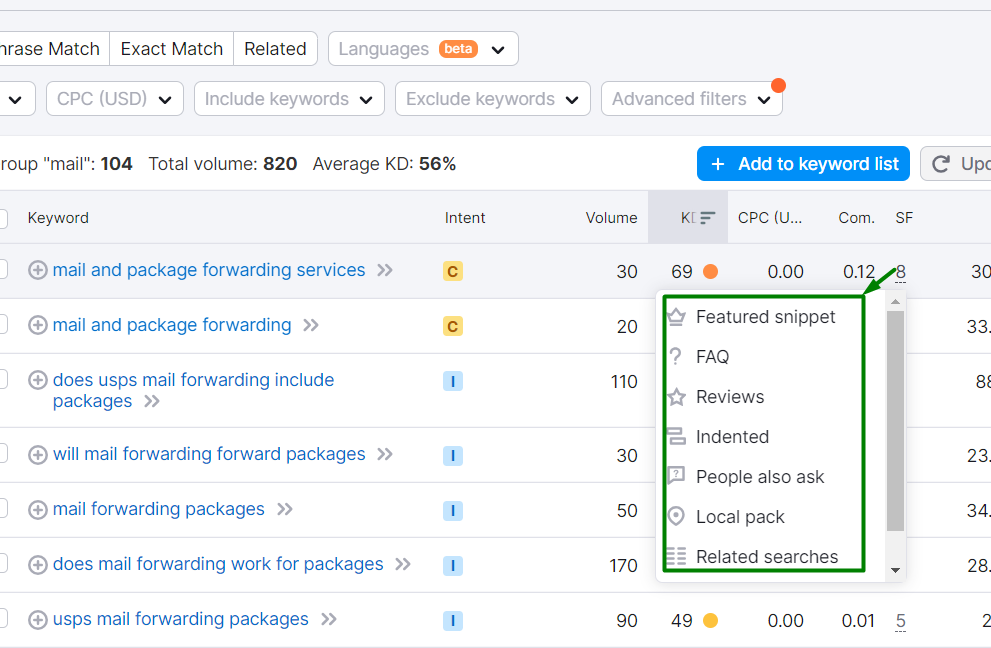
Look out for SERP features that allow you to rank more than just your main blog content that has been indexed. By SERP features, I mean other listings on the search engine results page that allows specific bits of your content to get featured on the first page.
Depending on the tool you’re using, you would see the number of SERP features and what type each keyword contains.
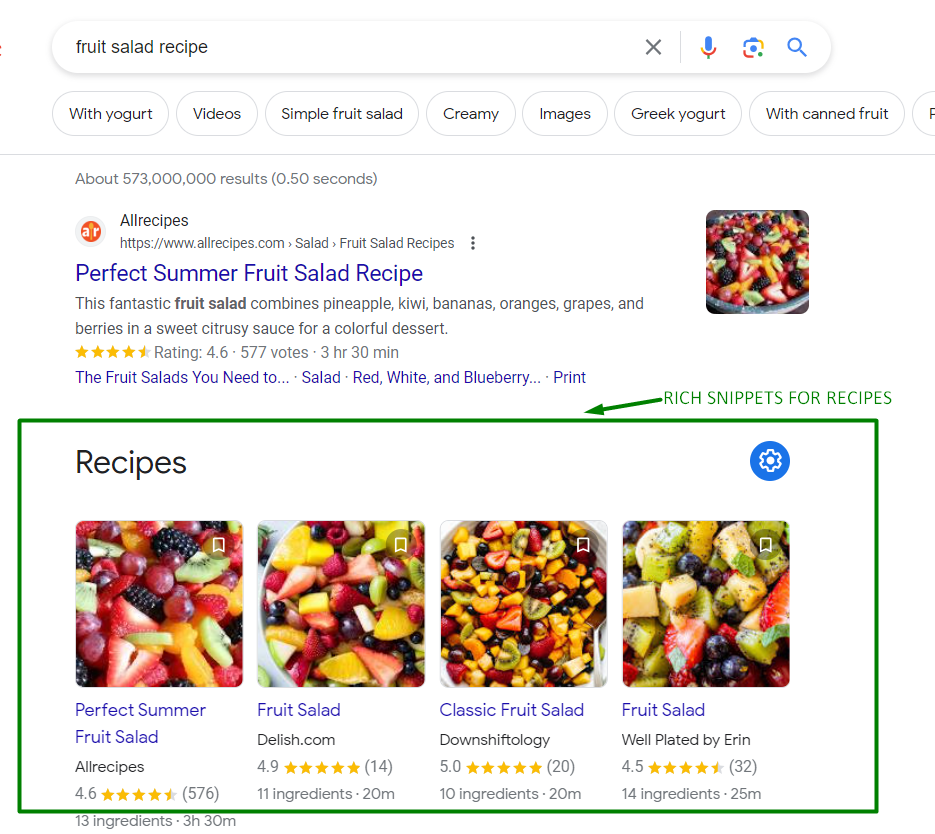
Some examples of SERP features include:
Once you’re done with your analysis, you can group your keywords using free tools like the Keyword Grouper tool. This feature comes together with some paid keyword research tools like SEMRush.
Below is an example of a spreadsheet with grouped keywords.
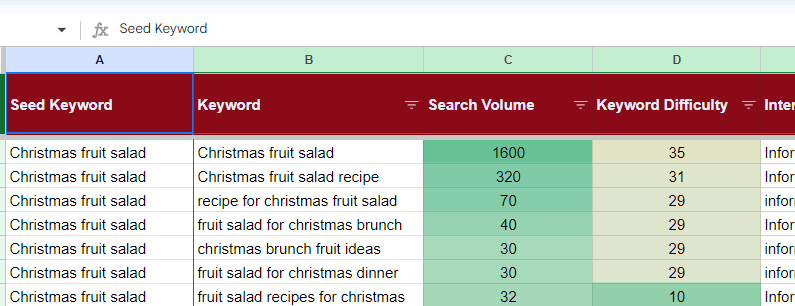
At this point, you might have multiple keywords that mean the same thing. For example, we have ‘Christmas fruit salad recipe’ and ‘Recipe for Christmas fruit salad’. Which keyword to prioritize in this case depends on the specific term that has more search volume, its difficulty level, the intent, and the keyword’s relevance to your business. In this case, the Christmas fruit salad recipe is the clear winner.
Grouping your keywords can also help you identify topic clusters to create. For example, you can create a pillar page content on Christmas fruit salad that has other subpages on:
Now you have relevant target keywords for your small business, you can go ahead and create content for your products and services. To recap, start your keyword research by brainstorming for topics around your business. Next, choose a tool, and analyze the keyword’s metrics, intent, and SERP features to find low-hanging fruits. Refine your list by grouping relevant keywords, and voila, you’re done!
If you would rather get professional help to get the most relevant keywords and content for your website, we can help. Reach out to us for personalized keyword and SEO services to grow your organic traffic.